Menu
Same-Day Service Available!

Hosting guests can make homeowners suddenly notice details they barely think about during a normal week. The living room may be tidy, the kitchen may be clean, and the floors may already be vacuumed, yet a couch with dull cushions or lingering odors can still make the room feel less fresh than expected. Upholstered furniture takes up a large amount of visual space, which means its condition can influence how clean and comfortable the entire room feels.
For families in Floresville, Texas, 78114, getting the home ready for visitors often means more than simply putting away clutter. Sofas, sectionals, dining chairs, recliners, and other fabric-covered furniture are some of the most frequently used surfaces in the house. Family members sit on them every day, pets may rest on them, children climb across the cushions, and guests gather around them during holidays, birthdays, dinners, and casual visits.
Over time, upholstery can collect dust, crumbs, body oils, pet hair, dander, food residue, and odors. Some of this material stays near the surface, while other debris settles deeper into the fabric and cushions. Even furniture that does not have obvious stains may begin looking dull or feeling less fresh.
This is where upholstery cleaning can make a noticeable difference.
A professionally cleaned sofa does not need to look brand new to improve the room. Removing everyday buildup can help restore a cleaner appearance, refresh the fabric, and make the furniture more inviting before visitors arrive.
Safe-Dry® of Floresville provides upholstery cleaning as part of its broader home cleaning services in the 78114 area. Homeowners can learn more about local service options through the Safe-Dry® Floresville location page. Safe-Dry® Carpet Cleaning of Floresville, TX (Safe-Dry Carpet Cleaning)
Preparing furniture before company arrives also fits into a larger healthy-home routine. The U.S. Environmental Protection Agency recommends regularly vacuuming fabric-covered furniture as part of reducing indoor dust and biological contaminants. Upholstered furniture can collect dust, pet dander, and other particles through everyday use, which makes consistent maintenance worthwhile even when guests are not expected. (US EPA)
One reason homeowners underestimate upholstery cleaning is that furniture does not always show dirt clearly.
A light-colored couch may reveal stains quickly, but darker fabric can hide soil for a long time. Patterned upholstery can also disguise discoloration, while textured fabrics make fine dirt harder to see.
The real buildup often develops gradually.
Every time someone sits down, natural body oils can transfer onto armrests, headrests, and cushion edges. Dust settles onto the surface between cleanings. Food crumbs work their way into seams. Pet hair collects between cushions. Children may bring sticky fingers, snacks, or outdoor dirt onto the furniture.
None of these things necessarily create one dramatic stain. Instead, the couch slowly begins to look less vibrant.
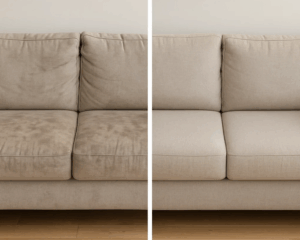
Homeowners sometimes notice the difference only after moving a cushion or flipping a pillow. The protected section underneath may look brighter than the area exposed to daily use.
This contrast is a strong sign that the upholstery has collected more soil than routine surface cleaning is removing.
Before hosting guests, those differences can suddenly become much more noticeable because homeowners are looking at the room through a visitor’s eyes.
Daily familiarity can make small changes difficult to see.
You may sit on the same couch every evening without thinking about the armrest looking darker than it did a year ago. A favorite recliner may have developed a slightly stale smell that everyone in the household has stopped noticing. A sectional may have crumbs hidden deep between cushions.
When visitors are coming, those details become harder to ignore.
The furniture often becomes the center of the gathering. Guests sit on the sofa, place bags on chairs, gather around coffee tables, and spend time in the living room.
A clean couch can make the whole area feel more comfortable.
This is one reason upholstery cleaning before hosting guests can be such a practical choice. Instead of cleaning only what is obviously dirty, professional service can refresh the surfaces people will actually be using.
For homes in Floresville, TX 78114, this can be especially helpful before holiday gatherings, family visits, birthdays, graduation parties, houseguests, or other events where the living room will see more activity than usual.
Upholstery rarely becomes dirty evenly.
Armrests tend to collect more body oils because hands and arms touch them frequently.
Headrests can develop darker areas from hair and skin oils.
The front edge of a cushion may show more wear because people repeatedly sit and stand from the same position.
Recliners often develop concentrated buildup where the head, arms, and legs rest.
Dining chairs can collect food residue around the seat and front edge.
Recognizing these patterns helps homeowners understand why vacuuming the center of a couch is not always enough.
A good upholstery cleaning routine should consider the entire piece, including seams, creases, cushion edges, backs, arms, and other high-contact areas.
Professional upholstery cleaning is particularly useful when these areas have developed visible discoloration or texture changes that regular maintenance no longer improves.
Pets add another layer of use to furniture.
Dogs and cats may sleep on couches, sit against cushions, rub along armrests, or jump onto furniture after being outdoors.
Pet hair is the most visible concern, but it is not the only one.
Dander, outdoor soil, natural oils, and occasional accidents can also affect upholstery.
A sofa can hold pet-related odors even after the visible hair has been removed.
This is why homes with pets may benefit from upholstery cleaning more often than homes where furniture receives lighter use.
The EPA notes that pet dander and hair can collect on upholstered furniture and recommends routine cleaning and vacuuming as part of indoor dust management.
For pet-friendly households preparing for visitors, focusing on the couch can have a big impact because guests may notice pet odors that family members have become accustomed to.
Fabric is absorbent.
Odors from pets, food, body oils, smoke, and everyday use can work deeper into upholstery than a quick spray can reach.
Air fresheners may temporarily change how the room smells, but they do not remove the material creating the odor.
The same issue can happen with deodorizing sprays applied directly to furniture.
A fragrance may cover the smell for a while, but the underlying source remains.
Professional upholstery cleaning can help remove the buildup contributing to stale odors instead of simply adding another scent on top.
This is especially useful before hosting overnight guests because furniture may be used for longer periods than usual.
A sleeper sofa, guest-room chair, or family-room sectional can feel much more inviting when it smells genuinely fresh rather than heavily fragranced.
Professional upholstery cleaning does not make regular vacuuming unnecessary.
Vacuuming is one of the simplest ways to slow down buildup between deeper cleanings.
Use an upholstery attachment whenever possible.
Move slowly over the cushions and arms.
Remove detachable cushions and vacuum underneath them.
Pay attention to seams, where crumbs and pet hair often collect.
Vacuuming is also worth doing several days before guests arrive because it helps you see whether the furniture needs more than routine maintenance.
If the couch still looks dull after loose debris is removed, deeper cleaning may be worthwhile.
The EPA specifically recommends vacuuming carpets and furniture regularly to help reduce indoor dust and particulate buildup.

Home maintenance mostly addresses what is easy to reach.
A lint roller removes hair.
A vacuum removes dry debris.
A cloth can blot a fresh spill.
Professional upholstery cleaning goes further by targeting soil and buildup held within the fabric.
The exact process depends on the material and condition of the furniture.
Some fabrics tolerate more moisture than others.
Some dyes are more sensitive.
Certain materials may require a gentler approach.
This is why checking the upholstery type before cleaning is important.
A trained technician can evaluate the furniture and choose a method that suits the fabric.
Safe-Dry® emphasizes family-friendly cleaning methods and trained technicians across its local services in Floresville. (Safe-Dry Carpet Cleaning)
Not all couches should be cleaned the same way.
Synthetic fibers often respond differently from natural fibers.
Microfiber has different care requirements than cotton blends.
Velvet, linen, delicate fabrics, and specialty upholstery may need additional caution.
Many upholstered pieces have a care label with a cleaning code.
Homeowners should look for this label before using any household cleaner.
A product that works well on one sofa could cause discoloration, water rings, or texture changes on another.
Professional technicians use the fabric type, condition, and care requirements to guide the cleaning process.
This is one reason professional upholstery cleaning becomes especially valuable when homeowners are unsure what material they have.
Timing matters.
Waiting until the morning guests arrive can create unnecessary pressure.
A better approach is to schedule upholstery cleaning several days before the gathering whenever possible.
This gives the furniture time to dry fully and gives homeowners time to finish the rest of their preparations.
Safe-Dry® is known for quick-drying cleaning methods, and the local Floresville location highlights low-moisture service designed to reduce drying time across its cleaning offerings.
The exact drying time for upholstery depends on the fabric, cushion construction, humidity, airflow, and level of cleaning needed.
Scheduling a little early removes the pressure of watching the clock.
It also gives you time to rearrange cushions, add throw pillows, and finish setting up the room after the cleaning is complete.
Preparing a home for visitors becomes easier when cleaning tasks happen in a logical order.
Dust higher surfaces first.
Clean ceiling fans, shelves, blinds, and tables before working on the furniture.
Loose dust naturally falls downward.
If upholstery is cleaned first and the room is dusted afterward, some of that debris may settle back onto the couch.
Next, vacuum the furniture and floor.
Once dry debris is removed, deeper upholstery cleaning can take place.
Finish with carpet cleaning, rug cleaning, or hard-floor care if those services are also planned.
This sequence helps reduce repeat work.
Many Floresville homeowners combine upholstery cleaning with professional carpet cleaning when preparing for company because the sofa and carpet often share the same living space.
Safe-Dry® of Floresville provides carpet cleaning, upholstery cleaning, rug cleaning, and other home cleaning services, which can make a whole-room refresh easier to plan.
Start by clearing the furniture.
Remove blankets, decorative pillows, toys, pet beds, and anything else sitting on the couch.
Wash removable throws and pillow covers according to their care labels.
This gives you a clear view of the upholstery and makes hidden spots easier to see.
It also prevents clean furniture from being covered again with dusty accessories.
Use an upholstery attachment and vacuum slowly.
Clean the seat cushions, backs, arms, sides, and creases.
If cushions are removable, take them off and vacuum underneath.
Pet hair often gathers along seams and behind cushions, while crumbs can settle deep into the frame.
A crevice tool can help reach narrow spaces.
Look over the furniture in good light.
Check armrests, cushion edges, headrests, and areas where pets usually sit.
Take note of any stains you recognize.
Knowing whether a spot came from coffee, food, makeup, pets, or another source can be helpful when deciding how to treat it.
Avoid experimenting with several cleaning products on the same stain.
Multiple products can leave residue or create unexpected reactions.
If a fresh spill happens while you are preparing the home, blot it gently.
Use a clean white cloth and apply light pressure.
Avoid rubbing aggressively.
Scrubbing can spread the spill or work it deeper into the fabric.
Follow the furniture manufacturer’s care instructions before applying any cleaner.
Look for the manufacturer’s care tag.
Cleaning codes can indicate whether the fabric is compatible with water-based cleaning, solvent cleaning, or other methods.
If you cannot find the code or do not know what the fabric is made from, avoid guessing.
Professional evaluation may be safer than trial and error.
Good airflow helps upholstery dry after cleaning.
Use ceiling fans where appropriate.
Keep interior doors open if it helps air circulate.
Climate control can also help maintain comfortable drying conditions.
Avoid placing damp cushions directly against one another.
Allow upholstery to dry fully before normal use.
Even when the surface feels dry, deeper cushion areas may still hold moisture.
Waiting until the piece is fully ready helps preserve the finished result.
Regular care does not need to be complicated.
Vacuuming once a week or as needed can help prevent dust and hair from building up.
Rotate cushions if the furniture design allows it.
This helps distribute wear more evenly.
Keep food and drinks on trays when possible.
Small habits can reduce spills around upholstered furniture.
Pet blankets can also help protect favorite sitting areas, especially if pets regularly use the couch.
Wash those blankets often so they do not transfer odor and hair back onto the upholstery.
These habits make professional upholstery cleaning easier and can help maintain the results longer.
DIY cleaning can work well for minor maintenance, but upholstery is less forgiving than many homeowners expect.
Too much water can create water marks or slow drying.
Too much cleaner can leave sticky residue.
Aggressive scrubbing may damage fibers or change the texture.
Using the wrong product can affect color.
One of the biggest mistakes is assuming more cleaner will produce a better result.
Extra product often means more residue.
Another common mistake is soaking a stain.
Liquid can move deeper into the cushion where it becomes harder to remove and slower to dry.
A controlled approach is usually better.
When a stain or odor remains after a careful first attempt, professional upholstery cleaning may be safer than repeatedly adding more products.
Cleaning residue can affect how furniture feels after service.
If soap remains in the fabric, the surface may feel stiff or slightly sticky.
Residue can also attract new dust and dirt.
Safe-Dry® focuses on soap-free cleaning methods designed to avoid leaving unnecessary residue behind.
This approach can be especially valuable before hosting because homeowners want furniture to feel clean and comfortable when guests sit down.
A fresh couch should not feel coated with product.
Hosting usually means more people spending time close to the furniture.
Children may sit on the floor beside the couch.
Guests may bring pets.
Family members may nap on the sectional.
Furniture becomes a shared surface.
Using a family-friendly cleaning approach matters because everyone interacts with upholstery differently.
Safe-Dry® emphasizes hypoallergenic, family-safe cleaning across its services.
This fits well with a home prepared for guests because the goal is not only to improve appearance. The goal is to create a cleaner, more comfortable environment people can enjoy.
Couches and carpets often collect similar debris.
Dust settles on both.
Pet hair moves between them.
Crumbs fall from furniture to the floor.
Foot traffic brings soil into the same room where people sit.
Cleaning only one surface can still create an improvement, but refreshing both can make the whole living space feel more complete.
Homeowners searching for carpet cleaning in Floresville may also realize that the sofa needs attention before guests arrive.
Safe-Dry® of Floresville serves the 78114 area with professional carpet cleaning and upholstery cleaning, making it easier to coordinate multiple surfaces when the home needs a broader refresh. (Safe-Dry Carpet Cleaning)
This does not mean every home needs every service.
The best approach is to look at the rooms guests will actually use and prioritize what needs the most attention.
Area rugs often sit directly in front of sofas and chairs.
If the couch is freshly cleaned but the rug is holding dust, pet hair, or odors, the room may still feel less fresh than expected.
Vacuum rugs thoroughly during your guest-preparation routine.
Check underneath them as well.
Dust and debris can collect beneath area rugs, especially in high-traffic rooms.
Professional rug cleaning may be helpful when vacuuming no longer improves the appearance.
More delicate pieces may require specialized oriental rug cleaning rather than general household methods.
A cleaner rug and cleaner upholstery can work together to make the living room feel more inviting.
Sofas tend to get most of the attention, but dining chairs can become some of the busiest pieces of furniture during a gathering.
Food spills, crumbs, body oils, and repeated use can leave fabric seats looking tired.
Inspect them before guests arrive.
Vacuum each chair.
Check for stains.
If multiple chairs have visible buildup, professional upholstery cleaning may save time compared with treating each one individually.
This is especially useful before holiday meals or larger family gatherings when every seat will be used.
Recliners are often among the most frequently used seats in a home.
They collect body oils around the headrest and arms.
Crumbs fall into moving sections.
Pet hair can work into creases.
Accent chairs may receive less use, but they still collect dust.
Before hosting, give these pieces the same attention as the main couch.
A freshly cleaned sofa beside a noticeably dusty recliner can make the contrast more obvious.
Pet owners sometimes worry that visitors will notice odors they no longer detect.
This is common because people become accustomed to the normal scent of their own home.
Furniture can be a major source of lingering pet odor because pets often spend long periods resting on cushions.
Vacuuming removes hair and some loose debris, but deeper odors may remain.
If a pet accident occurred on furniture, avoid relying only on fragrance sprays.
Pet odor removal works best when the source is addressed.
For carpeted areas, pet urine removal, pet stain removal, carpet deodorizing, and odor elimination may also be relevant if the problem extends beyond the couch.
When both furniture and carpet have pet-related concerns, cleaning the room as a connected space can produce a more complete result.
Fabric absorbs more than spills.
Cooking odors, fireplace smoke, and other airborne smells can settle into furniture over time.
A home may smell normal to the people who live there while guests notice it immediately.
Ventilation can help reduce airborne odors, but furniture that has absorbed them may need more attention.
The EPA explains that indoor air quality can be influenced by particles and pollutants from everyday activities, including cooking and household products. Improving ventilation and regular cleaning can help reduce indoor pollutants.
Upholstery cleaning can be one part of refreshing a room when fabric surfaces have begun holding onto stale smells.
A clean home does not need to smell strongly scented.
Heavy air fresheners can sometimes make a room feel less comfortable, especially for guests who are sensitive to fragrance.
Start with actual cleaning.
Vacuum the furniture.
Wash blankets and pillow covers.
Empty trash.
Clean rugs.
Improve airflow.
Once the sources of dust and odor are addressed, the room may already smell much fresher.
A lightly scented environment is usually more comfortable than trying to cover odors with strong sprays.
Professional service is useful when routine cleaning stops producing the result you want.
The couch may still look dingy after vacuuming.
Armrests may remain darker.
Pet odors may linger.
Several stains may need attention.
The fabric may feel stiff from old cleaning residue.
A large sectional may simply be too time-consuming to clean safely at home.
Hosting guests can provide the motivation to address these issues, but upholstery cleaning is not only for special occasions.
Professional cleaning can also be useful after a busy season, after moving, or whenever furniture begins looking noticeably worn from normal use.
Earlier is usually better.
For a small gathering, a few days may be enough.
For a major holiday, family reunion, or larger event, booking one or two weeks in advance can give you more flexibility.
Busy cleaning periods can fill quickly.
Scheduling early also prevents the cleaning from becoming another last-minute task.
If the gathering date is fixed, tell the cleaning company when guests are arriving.
This can help you choose an appointment that allows comfortable drying time.
A few questions can make the process easier.
Ask whether the company cleans your type of furniture.
Describe the number of pieces.
Mention any known stains, pet issues, or odors.
Explain if there is a specific event date.
Ask how drying time may vary for your fabric.
If you are also considering carpet cleaning services, area rug cleaning, or another service, mention those needs when requesting an estimate.
A clear description helps the company understand the scope of the job.
Pricing can vary because furniture comes in many sizes and materials.
A small dining chair is very different from a large sectional.
Condition also matters.
A lightly used couch may require less work than furniture with heavy pet buildup or multiple stains.
Homeowners often compare carpet cleaning prices, carpet cleaning cost, or affordable carpet cleaning when planning a larger home refresh, and the same principle applies to upholstery.
Look at the scope of service rather than focusing only on the lowest advertised number.
A clear estimate should reflect the actual furniture and condition.
Safe-Dry® of Floresville offers local service options and estimates for homeowners who want to plan upholstery cleaning alongside other cleaning needs.
Hosting can make homeowners want a quick and inexpensive solution.
However, cheap upholstery cleaning may not be a good value if the method leaves the furniture too wet, creates residue, or does not account for the fabric type.
Professional service should include evaluation, careful cleaning, and realistic expectations.
Look for trained technicians and a company that explains the process clearly.
The goal is to improve the furniture without creating new problems.
Furniture is part of the indoor environment.
Dust, pet dander, and fine particles can settle onto fabric surfaces and become disturbed during daily use.
The EPA recommends routine vacuuming of upholstered furniture as one way to reduce indoor dust and biological contaminants.
Professional upholstery cleaning does not replace good ventilation, filtration, or regular household cleaning.
It works alongside those habits.
A cleaner sofa, cleaner rug, and cleaner carpet can help create a living space that feels more comfortable and better maintained.
One week before guests arrive, look over the furniture and decide whether professional cleaning is needed.
Wash removable blankets and covers.
Schedule upholstery cleaning if necessary.
A few days before the gathering, dust higher surfaces, clean windows or mirrors, and organize clutter.
One or two days before, vacuum carpets and rugs, wipe hard surfaces, and prepare the guest areas.
On the day of the event, focus only on small finishing touches.
Fluff cushions.
Empty trash.
Check bathrooms.
Wipe counters.
This schedule keeps upholstery cleaning from becoming part of the final-hour rush.
One common mistake is waiting too long.
Trying a new cleaning product the night before guests arrive leaves no time to fix discoloration or slow drying.
Another mistake is using too much water.
A damp couch can take longer to dry than expected.
Homeowners also sometimes use excessive fragrance to cover an odor instead of cleaning the source.
Aggressive scrubbing is another problem.
Rubbing may spread a stain or damage the fibers.
A gentler, controlled approach is usually safer.
There is no single schedule that fits every home. Furniture used daily may need deeper cleaning more often than a formal chair used only occasionally. Homes with pets, children, frequent guests, or heavy daily use may also need upholstery cleaning more frequently.
Regular vacuuming is helpful because it removes loose hair, crumbs, and dust. Your technician can provide specific preparation instructions based on the furniture and service.
No cleaning method can guarantee removal of every stain. Some substances may permanently affect fabric color or fibers. Age, previous treatments, and material type can also influence the result.
A professional cleaner should use methods appropriate for family and pet households. Safe-Dry® focuses on family-friendly, hypoallergenic cleaning approaches across its services. (Safe-Dry Carpet Cleaning)
Drying time depends on fabric type, cushion construction, humidity, airflow, and the cleaning method used. Low-moisture cleaning can help reduce drying time, but homeowners should allow furniture to dry fully before normal use.
Some upholstery can be cleaned with approved household products, but always check the furniture care label first. Test unfamiliar products in a hidden area and avoid over-wetting.
Vacuuming removes loose debris but does not always remove material deeper in the fabric or cushion. Pet oils, food residue, spills, and other buildup can contribute to lingering odor.
Both can be coordinated as part of the same room refresh. Dusting should usually happen first. Your cleaning provider can help determine the most practical order for professional upholstery and carpet cleaning.
Vacuuming is usually the first step for loose pet hair. Professional cleaning can then address deeper soil and buildup that remain in the fabric.
It can be worthwhile when the furniture is visibly dull, stained, or holding odors. Because guests often spend most of their time in living and dining areas, cleaner upholstery can improve the overall feel of the gathering space.
Many sofas, sectionals, chairs, recliners, and dining chairs can be professionally cleaned. Fabric type and manufacturer care instructions should be evaluated first.
Cleaning can improve appearance by removing soil and buildup, but it cannot reverse permanent fading, worn fabric, tears, or structural damage.
Armrests receive frequent contact with hands and skin, which can transfer oils and soil. These areas often become visibly darker before the rest of the furniture.
Avoid applying unnecessary powders or products immediately before service. Some materials can be difficult to remove completely and may interfere with cleaning. Ask the technician if you are unsure.
Vacuum loose debris, address spills promptly, wash removable covers when appropriate, rotate cushions, and keep pet blankets clean. Regular maintenance can help preserve the professional cleaning result.
Hosting should feel enjoyable, not like a race to hide every small sign of everyday life.
Your furniture does not need to be perfect. It simply needs to feel clean, comfortable, and ready for people to use.
Regular vacuuming, quick spill care, clean throws, good airflow, and sensible fabric maintenance can keep upholstery looking better throughout the year. When the couch still looks dull, carries lingering odors, or has accumulated more buildup than routine care can handle, professional upholstery cleaning can provide a deeper refresh.
For families in Floresville, Texas, 78114, Safe-Dry® offers upholstery cleaning along with professional carpet cleaning, area rug cleaning, and other services that can help prepare frequently used spaces before visitors arrive. The local Floresville service area includes the 78114 ZIP code and provides homeowners with a convenient option for refreshing the surfaces their families and guests use most.
Preparing early makes the biggest difference. Instead of spending the night before your gathering scrubbing cushions or spraying fragrance around the room, you can focus on the people coming through the door.
If your couch, sectional, dining chairs, or other upholstered furniture could use a deeper clean before your next gathering, connect with Safe-Dry® of Floresville to request an estimate or schedule upholstery cleaning. A cleaner sofa can help the whole room feel fresher, more comfortable, and ready for company.